
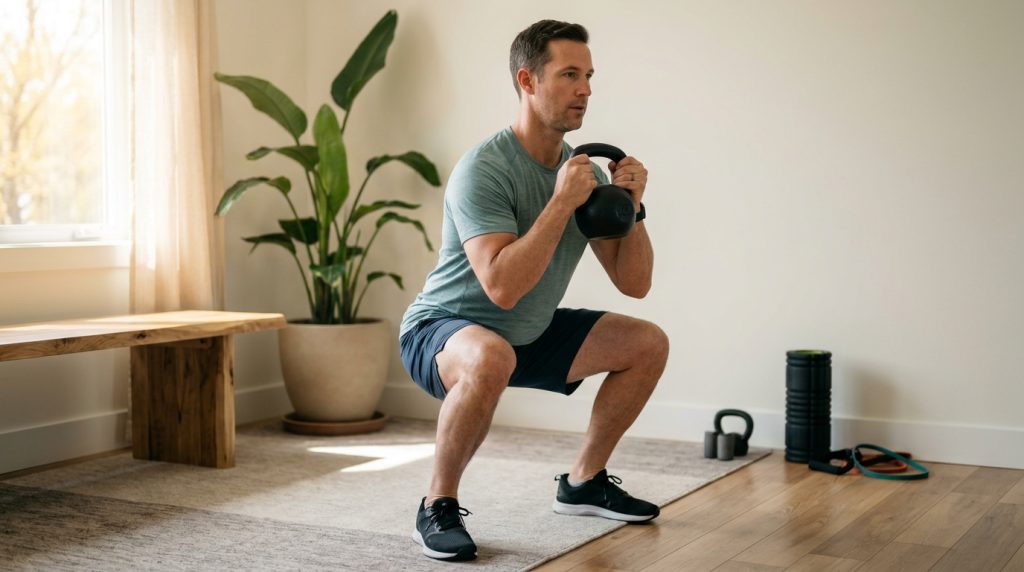
We often associate strength training with bulky muscles and competitive bodybuilding. While that is certainly one expression of it, there is another form of resistance training that has less to do with how you look in the mirror and more to do with how you experience and move through the world. This is functional strength training, and it’s a powerful tool for enhancing your daily well-being, mobility, and overall quality of life. Unlike conventional isolation exercises that target a single muscle in a fixed machine, functional strength training prioritizes movement patterns that mimic the demands of real-world activities. It’s not about lifting for a trophy; it’s about lifting, bending, and reaching to live with ease.
This approach acknowledges that your body works as a singular, connected unit. The dynamic, multi-joint movements involved provide profound and practical benefits of functional strength training that ripple through your everyday life, making everything from carrying groceries to playing with your children easier and safer.
Why ‘Functional’ Matters: A Reality Check
What does “functional” mean in this context? Think about your typical day. You twist to grab your seatbelt. You squat to pick up a dropped object. You carry heavy shopping bags. These are multi-planar movements that require coordination, stability, and integrated power, not isolated muscle engagement. When you squat in a machine, you are guided through a pre-determined path. When you squat to pick up a child, you must stabilize your own body, coordinate your legs and core, and generate lift. Functional strength training bridges this gap. Its core purpose is to build strength that applies specifically and intentionally to the physical demands of life, reducing the cognitive and physical load of these simple tasks.
The Life-Changing Benefits of Functional Strength Training
The value of this training extends far beyond the gym floor. Here are key benefits that can transform your health and capability.
1. Superior Injury Prevention and Resilience
This is perhaps the most significant and under-celebrated benefit. Conventional training, while valuable, can sometimes create muscle imbalances. A body that is disproportionately strong in isolated pushing movements but weak in its supporting stabilising muscles and complex pulling patterns is a body that is vulnerable to injury. Functional strength training inherently addresses these gaps. It develops the smaller, critical stabilizing muscles around your joints—the ones that prevent a rolled ankle or a twisted back during unexpected movements. It also emphasizes full-body coordination and multi-planar stability, which are essential for navigating uncertain terrain or reacting quickly. By preparing your body for a diverse range of stresses, you build true athletic resilience.
2. Enhanced Mobility, Balance, and Coordination
Functional exercises are dynamic and rarely linear. You might lung diagonally, rotate while lifting, or step up onto a changing surface. These movements challenge and improve your proprioception—the body’s ability to sense its position in space. This directly translates to improved balance and coordination, reducing the risk of falls, especially in older adults. Furthermore, by training through large ranges of motion and emphasizing controlled movement, functional strength training improves active flexibility and mobility, allowing you to move with more fluid grace.
3. Increased Core Strength and Stability
Almost every functional exercise is a core exercise. When you perform a goblet squat or a farmer’s carry (where you walk while holding weights), your deep abdominal and back muscles must constantly fire to maintain proper posture and stabilize your spine. This “anti-rotation” and core control is invaluable. A strong, stable core is the foundation for all safe human movement. It protects your lower back during strenuous activities and ensures that your extremities can generate power without risking injury. This functional stability is far more relevant to your life than a simple aesthetic six-pack.
4. Efficient Full-Body Workouts and Calorie Burn
Functional exercises require multiple muscle groups and joints to work together in harmony. This high degree of muscular coordination makes the workouts intense, engaging, and incredibly efficient. A routine based on integrated movements burns more calories in less time compared to traditional isolation machine routines. You achieve more with less “filler” time. Moreover, this approach creates an excellent metabolic ripple effect, which can increase your resting energy expenditure for hours after your session.
Practical Insights for Your Functional Journey
You don’t need an exhaustive gym of machinery to get started. You can begin with bodyweight exercises and add resistance as you progress. The key is to focus on quality movement over heavy weight.
-
Squatting Patterns: Bodyweight squats, goblet squats, and reverse lunges mimic sitting, standing, and lifting.
-
Pushing Patterns: Push-ups (on your knees or a raised surface initially) and dynamic overhead presses develop the upper body integrated with the core.
-
Pulling Patterns: Suspension trainer (e.g., TRX) rows and kettlebell deadlifts build the back and grip strength required for hauling.
-
Carrying Patterns: The farmer’s carry is a foundational exercise for posture, core, and overall full-body coordination. It is simply walking while holding heavy objects in each hand.
Focus on a slow, controlled tempo. Master the movement, then increase the challenge. Consistency over intensity is paramount.
Common Misconceptions to Avoid
One common mistake is treating functional training as a free-for-all. Because the movements are dynamic, precision is critical. High repetitions with poor form can cause injury faster than static machine training. Another misconception is that “bodyweight isn’t enough.” For many beginners and intermediate athletes, bodyweight lunges and complex push-up variations are plenty of challenge to stimulate adaptation and improvement. Listen to your body and avoid sacrificing form for speed. Functional training should be about control and mastery.
Functional strength training offers a pragmatic and powerful path to lifelong vitality. It transforms your body not as an end goal of aesthetics but as a mean to live a more capable, resilient, and effortless life. Whether you are an athlete looking for an edge or an older adult seeking independence, dedicating time to multi-joint, real-world movement is an investment in your well-being. By moving beyond the static limitations of isolated machines and embracing dynamic, integrated strength, you build a foundation that truly serves you, every single day.
Frequently Asked Questions
1. Is functional training good for all ages? Yes, it is beneficial for everyone, from children developing fundamental motor skills to older adults maintaining their independence. It is highly adaptable.
2. Do I need special equipment to start? Absolutely not. You can achieve significant gains using just your body weight. Items like kettlebells, dumbbells, resistance bands, and suspension trainers can enhance the routine but are not required.
3. Will functional training help me lose weight? It is a very efficient calorie burner due to its high metabolic demand. When combined with a balanced diet, it can certainly assist in weight management.
References and Further Reading