
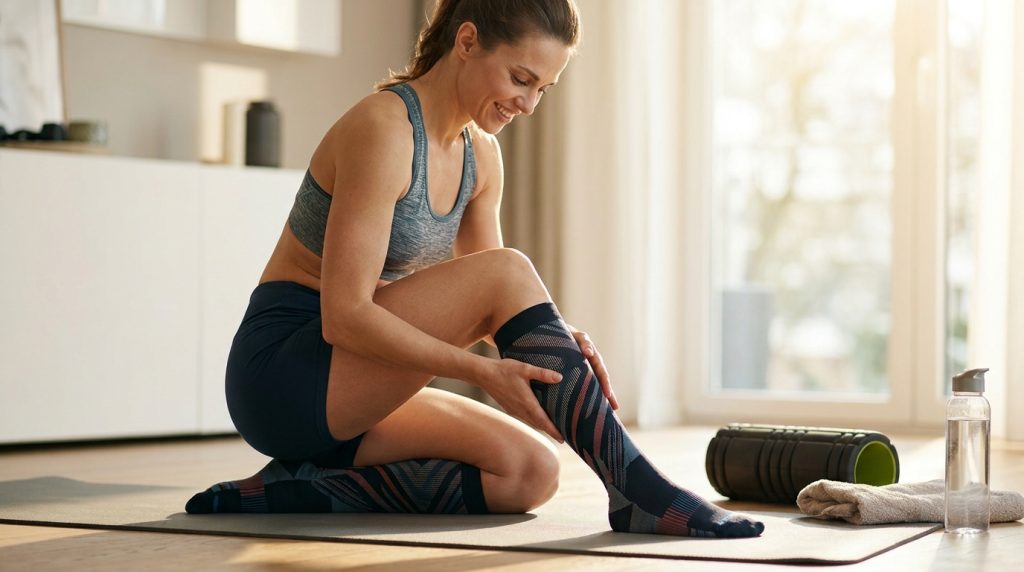
You’ve likely seen them: athletes at the gym, runners on the trail, and even travelers on long flights sporting knee-high socks that look a bit more substantial than your average pair. They are compression socks, and they have transcended their medical origins to become a staple in the modern fitness enthusiast’s toolkit. If you’ve ever wondered if these tight garments are just a trend or a legitimate tool for boosting your post-workout healing, you’re in the right place.
The journey of fitness doesn’t end when your cool-down session finishes; that’s just where the recovery phase begins. This phase is critical because it’s when your body repairs tissue, builds muscle, and prepares for the next challenge. For many, integrating the right recovery tools—like nutrition, hydration, and compression—can make the difference between consistent progress and frustrating plateaus caused by injury or chronic soreness.
What Are Compression Socks and How Do They Work?
At their core, compression socks are specialized, elastic garments designed to apply gentle pressure to your lower legs. This pressure is not uniform; it is generally strongest at the ankle and gradually decreases as the sock moves up the calf. This is known as graduated compression.
The mechanism behind it is rooted in basic physiology: fighting gravity. Your heart pumps oxygen-rich blood down to your legs, but the veins and muscles must work together to pump that deoxygenated blood and metabolic waste back up to the heart and lungs. When you exercise intensely, metabolic byproducts, like lactate, can pool in your lower extremities. The graded pressure of compression socks squeezes the vein walls, helping the valves function more efficiently and accelerating the velocity of blood flow back toward the heart. This enhanced blood flow circulation is the engine that drives most of the claimed benefits.
Key Benefits of Compression Socks for Recovery
The science suggests that wearing compression garments, specifically socks, after strenuous activity offers several tangible advantages for athletes of all levels.
1. Reduced Muscle Soreness (DOMS)
One of the most sought-after benefits is the reduction of Delayed Onset Muscle Soreness (DOMS). This is the stiff, achy feeling that peaks 24–48 hours after a novel or intense workout. By improving blood flow, compression socks may help wash away the waste products that contribute to inflammation and soreness, allowing you to bounce back faster.
2. Accelerated Muscle Repair and Reduced Inflammation
By stabilizing the muscles, compression garments may reduce muscle oscillation (vibration) during exercise, which can cause micro-tears. Post-exercise, the improved circulation delivers the essential nutrients and oxygen needed for muscle repair more efficiently to the taxed tissues, which may help to minimize post-workout inflammation.
3. Prevention of Leg Swelling (Edema)
Intense activity or even prolonged standing/sitting can cause fluid retention in the lower legs. The consistent pressure from the socks helps to manage and prevent leg swelling, keeping your legs feeling light rather than heavy and fatigued.
Choosing and Using Compression Socks Effectively
To reap the maximum rewards, you can’t just grab any pair of tight socks. You need the right fit and the right approach.
Selecting the Right Pressure and Fit
Compression levels are measured in millimeters of mercury (mmHg).
-
Mild Compression (15-20 mmHg): Great for daily wear, light activity, and recovery after light-to-moderate exercise.
-
Moderate Compression (20-30 mmHg): The most popular “performance” and “recovery” level, suitable after high-intensity training.
-
Firm Compression (30+ mmHg): Usually medical-grade and used under professional guidance for circulatory issues.
For fit, accuracy is everything. Measure your calf circumference at its widest point and your ankle at its narrowest point, and consult the manufacturer’s size chart. They must be snug but never painful.
Practical Tips for Post-Workout Use
-
Wear Them Right After: The optimal window is immediately following your workout. Put them on after your shower.
-
Duration Matters: Wear them for 2 to 4 hours post-exercise. Some athletes prefer wearing them for 8+ hours (even overnight), although the data is less definitive on the added benefit, provided they are comfortable.
-
Ensure Proper Wear: Make sure there are no bunches or folds in the fabric, which can create points of excessive pressure and restrict circulation (the opposite of the goal!).
Common Mistakes to Avoid
-
Wearing Them Only During Exercise: While they can offer performance benefits (reduced muscle vibration, perceived exertion), their greatest strength for many lies in the post-workout recovery phase. Don’t skip wearing them after the work is done.
-
Ignoring Comfort and Fit: If the socks are painfully tight or leave deep marks, they may be constricting blood flow rather than aiding it. This is counterproductive and potentially unsafe.
-
Treating Them as a Substitute for Other Recovery: Compression socks are an adjunct to, not a replacement for, fundamental recovery strategies like hydration, nutritious food, sleep, and active recovery.
Conclusion
Compression socks for recovery represent a relatively simple, safe, and increasingly validated way to support your body’s natural healing processes after strenuous fitness activities. By leveraging the principles of graduated pressure to optimize blood flow circulation, these garments can reduce soreness, minimize swelling, and potentially speed up your return to top performance. Whether you’re an endurance athlete or a gym enthusiast, the extra edge they provide in minimizing the dreaded leg fatigue might just make them a new essential in your routine.
FAQ: Your Top Questions Answered
Q: Can I sleep in compression socks for recovery? A: It is generally safe to sleep in mild compression socks (15-20 mmHg), provided they are comfortable and do not cause any constriction. Many athletes find this enhances recovery. However, avoid sleeping in firm, medical-grade compression (30+ mmHg) unless medically advised.
Q: Will compression socks help with shin splints? A: They can help manage the symptoms by stabilizing the calf muscles and reducing vibration during activity, which may alleviate stress on the tibia. Post-workout, they can help reduce inflammation in the area. However, they are not a cure; you must still address the underlying cause (e.g., training load, footwear).
Q: Do I need graduated compression, or will regular tight socks work? A: Graduated compression is essential for circulatory benefits. Regular, uniformly tight socks or “sleeves” don’t provide the same dynamic “pump” effect and can potentially constrict blood flow if not designed correctly. Always look for specified compression ratings (e.g., 20-30 mmHg).
References and Further Reading
- Start Running: A Comprehensive Beginner’s Guide to Your First 5K
- Beyond Aesthetics: The Transformative Benefits of Functional Strength Training for Everyday Life