
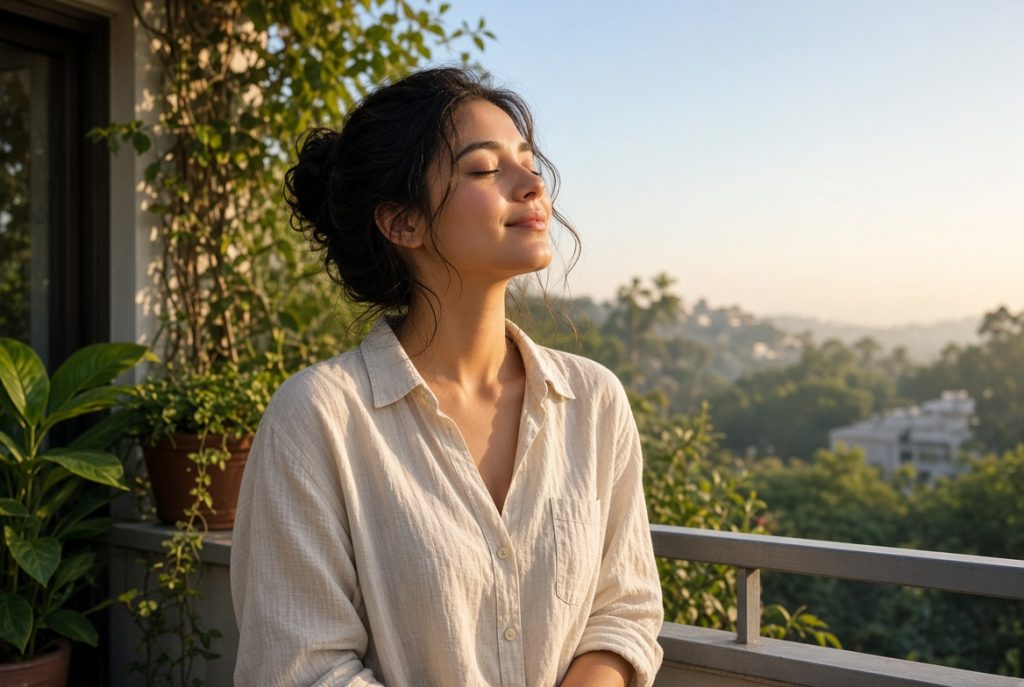
Many people start the day already feeling behind—reaching for caffeine before their eyes are fully open and struggling to stay focused by mid-afternoon. While sleep duration and evening routines get plenty of attention, one of the most underused tools for improving both daytime energy and nighttime rest is surprisingly simple: morning sunlight exposure. Getting natural light into your eyes early in the day helps set your internal clock, supports alertness, and can make it easier to wind down later. This is not about chasing perfect weather or adding another complicated ritual; it is about using a free, available signal that your body already knows how to interpret.
Why Morning Light Matters for Your Internal Clock
Your body runs on a roughly 24-hour cycle known as the circadian rhythm. This rhythm influences when you feel awake, when you feel sleepy, hormone release, body temperature, and even aspects of digestion and mood. Light is the strongest external cue that keeps this rhythm aligned with the actual day.
Special cells in the eyes detect brightness and send signals to the brain’s master clock. Morning light, especially within the first hour or two after waking, is particularly effective at this job. It helps suppress melatonin (the hormone that promotes sleepiness) at the right time and sets a timer for its release later in the evening. When this signal arrives consistently, many people notice they feel more naturally alert during the day and sleepier at a more appropriate hour at night.
Indoor lighting is usually much dimmer than outdoor light, even on a cloudy day. Office or home lights rarely provide the intensity or spectrum that outdoor morning light does. That is why a few minutes outside—or even near a large open window if going outside is not possible—tends to work better than relying on regular indoor bulbs alone.
Additional Effects Beyond the Clock
Consistent morning sunlight exposure is also linked to better mood for many people. Bright light can influence brain chemicals involved in alertness and emotional balance. While it is not a treatment for clinical conditions, people who regularly get outdoor light early often report feeling more even-keeled as the day progresses.
There is also a secondary benefit related to vitamin D. Your skin produces vitamin D when exposed to certain wavelengths of sunlight. Short periods of morning or midday outdoor time can contribute to this process, depending on latitude, season, skin tone, and clothing. It is not a substitute for dietary sources or supplements when levels are low, but it is a useful additional source for those who spend most of their time indoors.
How Much Morning Sunlight Is Useful?
There is no single perfect duration that works for everyone. Intensity matters more than exact minutes. On a bright, clear morning, 5–15 minutes can be enough for many people to get a meaningful signal. On overcast days or in higher latitudes during winter, 20–30 minutes is often more realistic.
The key factors are:
- Timing: as early as practical after waking, ideally within the first 1–2 hours.
- Outdoor preference: being outside is stronger than sitting behind glass, because windows filter some of the relevant wavelengths.
- Consistency: daily or near-daily exposure is more valuable than occasional long sessions.
- Eyes open and facing the light: you do not need to stare at the sun (and should not); simply being in the light with eyes open is sufficient. Sunglasses reduce the signal, so many people skip them for the short morning period.
People with very sensitive skin or those living in extreme climates can still benefit from shorter, protected exposure or by combining outdoor time with other healthy habits.
Practical Ways to Fit Morning Sunlight Into Real Life
Busy schedules are the most common barrier. The good news is that morning light does not require a separate workout or a long commitment. It can be paired with activities you already do.
Pair It With an Existing Habit
The easiest approach is to attach the light exposure to something you already do every morning:
- Take your coffee or tea outside or stand by an open door while drinking it.
- Walk the dog, or simply walk around the block or to the end of the driveway.
- Eat breakfast on a balcony, porch, or near a large window.
- Do a short stretch or breathing exercise outdoors.
- Check messages or listen to a podcast while standing outside for a few minutes.
These small pairings reduce the friction of “finding time.”
Options for Different Living Situations
- Apartment dwellers: use a balcony, courtyard, or a short walk to a nearby green space. Even standing outside the building entrance works.
- Parents with young children: take the kids outside for a few minutes of play or a stroller walk first thing.
- Shift workers or irregular schedules: aim for light as soon as you wake, even if that is not traditional morning hours. The goal is light shortly after your personal “morning.”
- Winter or rainy climates: overcast light still provides a useful signal. Waterproof layers or a short covered outdoor area can make it manageable. If outdoor time is truly limited, maximize time near large windows and consider a high-quality bright light device later in the morning as a backup (though natural outdoor light remains preferable).
Building Consistency Without Perfection
Start with the smallest version you can reliably do—five minutes most days is better than thirty minutes twice a week. Track it simply for a week or two (a note on your phone or a checkmark on a calendar) so you notice the pattern. After the habit feels automatic, you can adjust duration based on how you feel and the season.
Many people notice clearer morning alertness within a few days and more consistent evening sleepiness after one to two weeks of regular practice. Results vary, and other factors (caffeine timing, evening light, exercise, and meal timing) also influence energy and sleep.
Common Mistakes That Reduce the Benefit
Even people who know about morning light sometimes miss the full effect because of small habits:
- Wearing sunglasses the entire time: this significantly reduces the light signal reaching the eyes. Save sunglasses for later in the day if needed.
- Relying only on indoor lighting: typical room lights are not bright enough to fully replace outdoor morning light.
- Inconsistent timing: getting bright light at random times or very late in the morning weakens the anchoring effect on your body clock.
- Looking through closed windows exclusively: glass blocks some of the most useful wavelengths. Opening a window or stepping outside briefly is better.
- Expecting immediate dramatic changes: the benefit compounds with consistency rather than appearing overnight.
- Combining it with late-night bright light or screens: evening light exposure can counteract the morning signal by delaying melatonin.
Addressing these small points usually improves results without requiring extra time.
How Morning Light Fits Into a Broader Healthy Living Approach
Morning sunlight exposure works best as one piece of a simple daily rhythm rather than an isolated trick. People who combine it with reasonably consistent sleep and wake times, some daytime movement, and reduced bright light in the hour or two before bed often see the strongest improvements in energy and sleep quality.
It also pairs well with other low-effort healthy living habits: a short outdoor walk, drinking water early, or eating a balanced breakfast in natural light. None of these need to be perfect; the cumulative effect of several small, repeatable actions tends to matter more than any single ideal routine.
If you have been struggling with low morning energy or difficulty falling asleep at a reasonable hour, experimenting with consistent morning light is one of the lower-risk, higher-potential changes you can test. It costs nothing, requires no equipment, and can be adjusted to almost any schedule or living situation.
Conclusion
Morning sunlight exposure is a straightforward, evidence-aligned habit that helps align your internal clock with the day. By getting natural light into your eyes relatively soon after waking, you support daytime alertness, make it easier for melatonin to rise at night, and create a simple foundation for better energy and recovery. The practice does not demand long sessions or perfect conditions—just a few consistent minutes most days, ideally outdoors. Start small, pair it with something you already do, and give it a couple of weeks. Many people find that this single adjustment makes the rest of their day feel more manageable and their evenings calmer.
FAQ
How long do I need to spend outside for morning sunlight exposure to help?
Most people benefit from 5–15 minutes on bright days and closer to 20–30 minutes on cloudy days. Consistency and timing (early after waking) matter more than hitting an exact number.
Does morning light still work on cloudy or rainy days?
Yes. Outdoor light on an overcast day is still substantially brighter than typical indoor lighting and provides a useful signal to your circadian system.
Can I get the same benefit through a window?
Sitting near a large window helps, but being outdoors is more effective because glass filters some important wavelengths. Opening the window or stepping outside for even a few minutes is better when possible.
What if I wake up very early or very late?
Aim for light exposure shortly after your own wake time. The relative timing to your personal morning is what primarily sets the signal for your body clock.
Is morning sunlight exposure safe for everyone?
Short periods are generally well tolerated. People with certain skin conditions, photosensitivity, or eye conditions should check with a healthcare professional. Avoid looking directly at the sun, and use appropriate protection if you stay out longer.